The Millenium was one week old…
Here’s a selection of 25 years of Open Source consulting and coaching. Scroll down for the most recent highlights or jump to one of the past years:

Feilner IT was founded on January 7, 2000, in Regensburg, by Markus Feilner. The senior Linux expert had been gathering Linux experience and had been doing services for customers like the Regensburg university since 1994.
Feilner-IT quickly grew to a sustainable company based on open source and journalism. Learn more about Markus in his profile (PDF: English and German).
Markus has written books, helped customers and partners in politics, industry, education and public administration. On top of all that, for 10 years, he was deputy editor-in-chief of the german Linux-Magazin, Team Lead documentation at SUSE Linux (where he helped to build a documentation team from 5 to 16 members). Since 2019, Markus has been acting as an open source business angel (“ambassador”), developing the concept of agile recursive documentation, on-boarding and open source leadership.
News and Recent Highlights from 2026
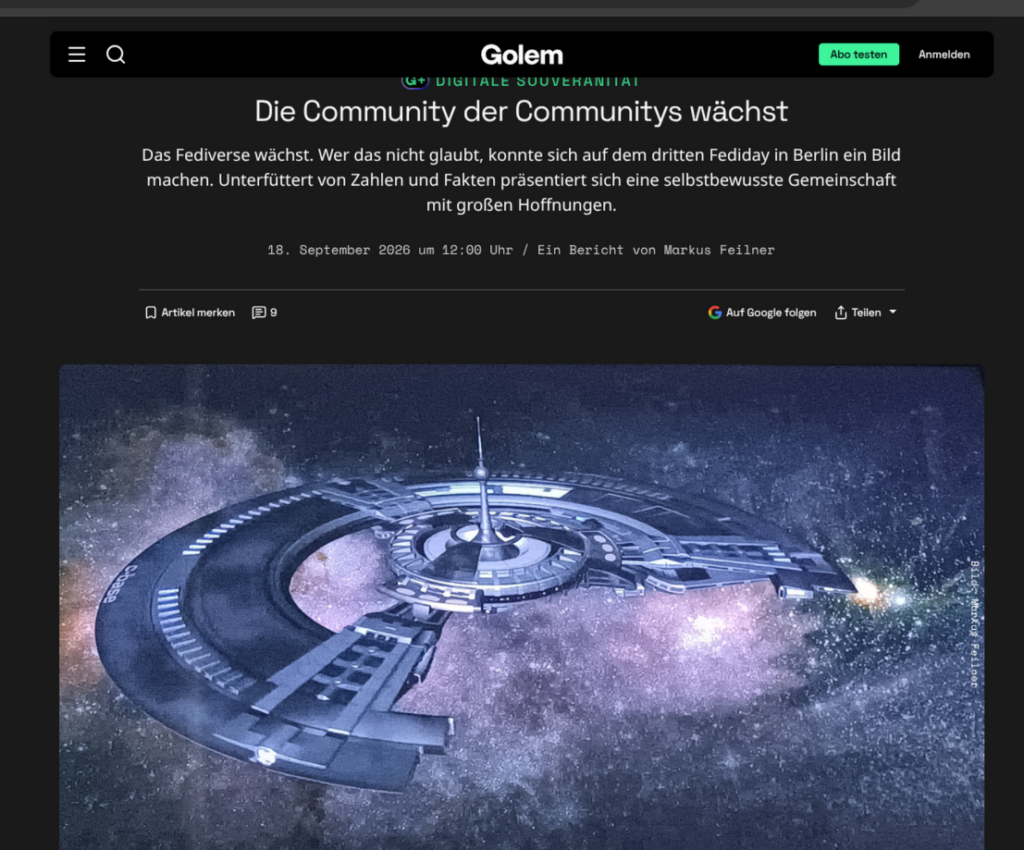
The community of communities is growing
The Fediverse is growing. Anyone who doesn’t believe that could get an idea for themselves at the third Fediday in Berlin. Supported by facts and figures, a self-confident community presents itself with high hopes.
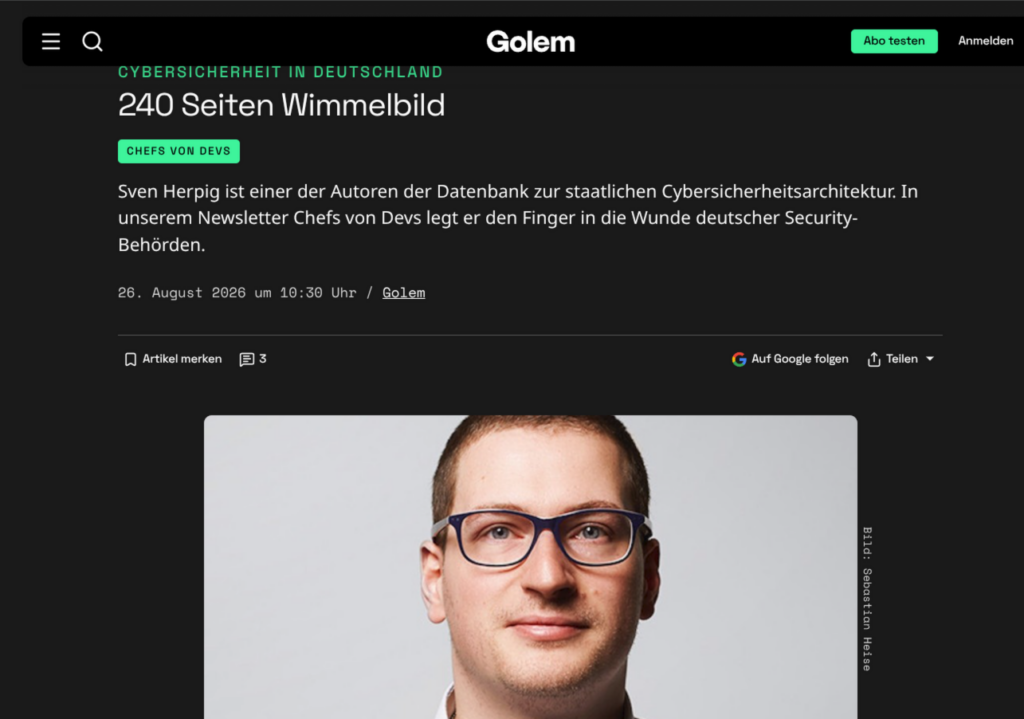
Sven Herpig is one of the authors of the database on government cybersecurity architecture. In Golem’s newsletter “Chefs von Devs” (Chief Developers), he exposes the shortcomings of German security authorities.
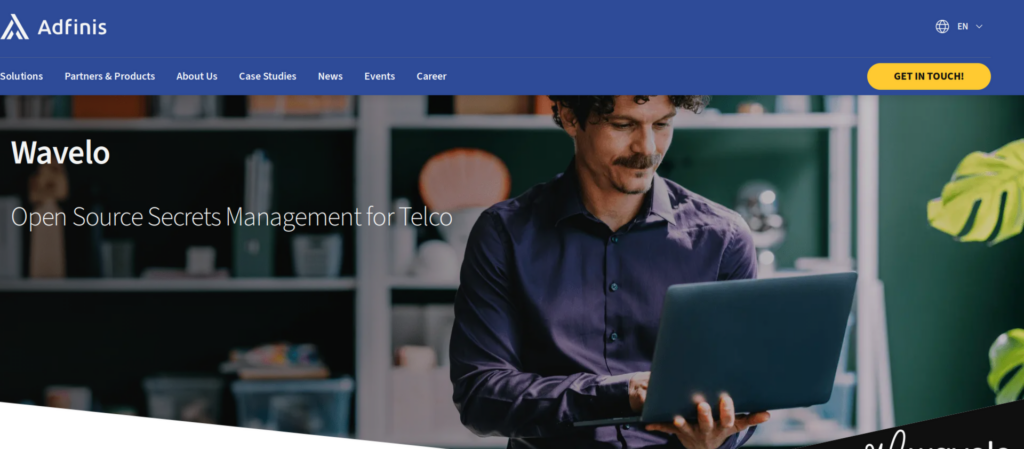
Case study for Adfinis: “Facing a strict ten-month deadline and rising proprietary license costs, Wavelo partnered with Adfinis to migrate its proprietary secrets management platform to OpenBao™. Adfinis co-developed the missing enterprise features, including multi-tenancy and horizontal scalability, by contributing them directly to the OpenBao open source project...”
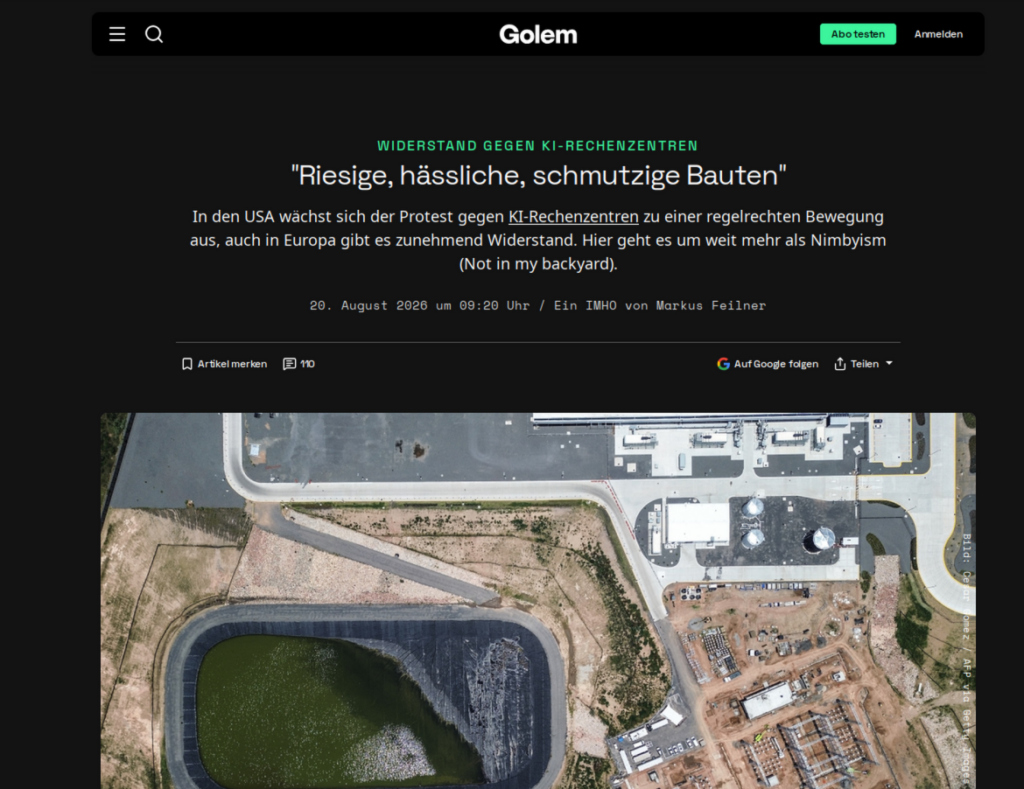
For Golem: Resistance to AI data centers- “Huge, ugly, dirty buildings”
In the US, protests against AI data centers are growing into a full-blown movement, and resistance is also increasing in Europe. This is about far more than NIMBYism (Not in my backyard).
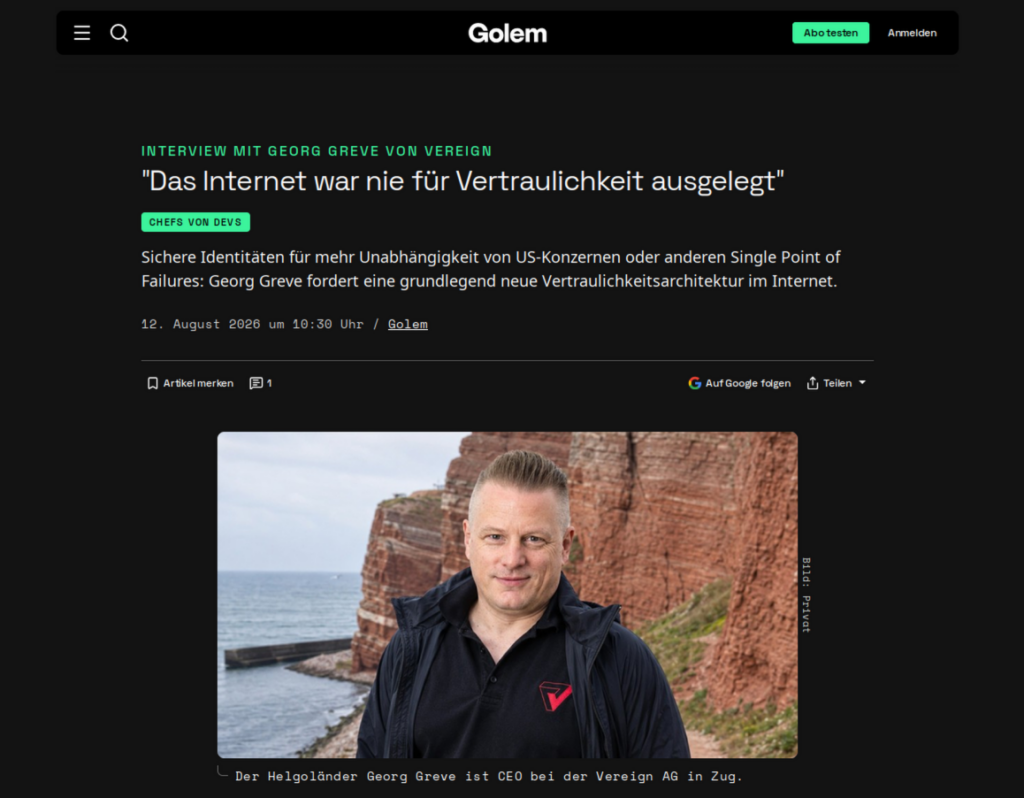
For Chefs von Devs in Golem: Interview with Georg Greve of Vereign “The internet was never designed for confidentiality.“
Secure identities for greater independence from US corporations or other single points of failure: Georg Greve calls for a fundamentally new confidentiality architecture on the internet.
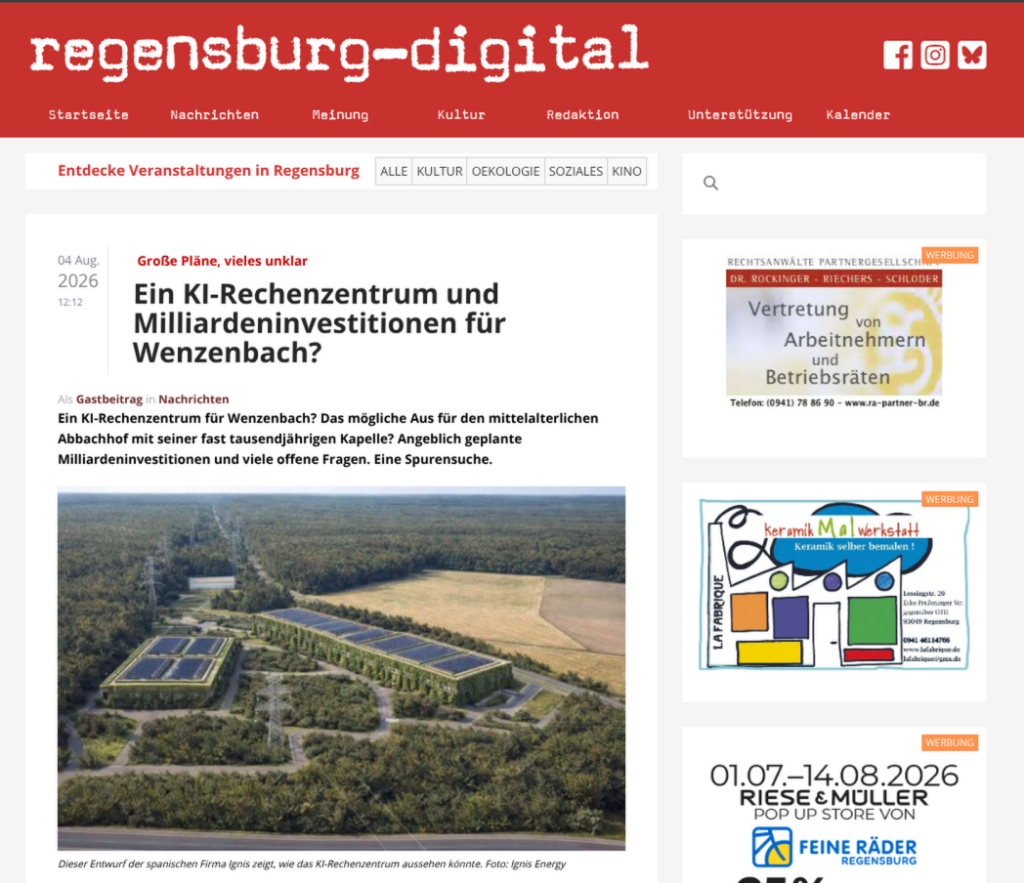
For regensburg-digital: An AI data center for Wenzenbach? The potential end for the medieval Abbachhof estate with its nearly thousand-year-old chapel? Allegedly planned billion-euro investments and many unanswered questions. An investigation.
For Golem: Oracle and the riskiest bet in the AI industry
Oracle is investing hundreds of billions in AI data centers – and is dependent on OpenAI in doing so. If this gamble falters, far-reaching consequences are possible.
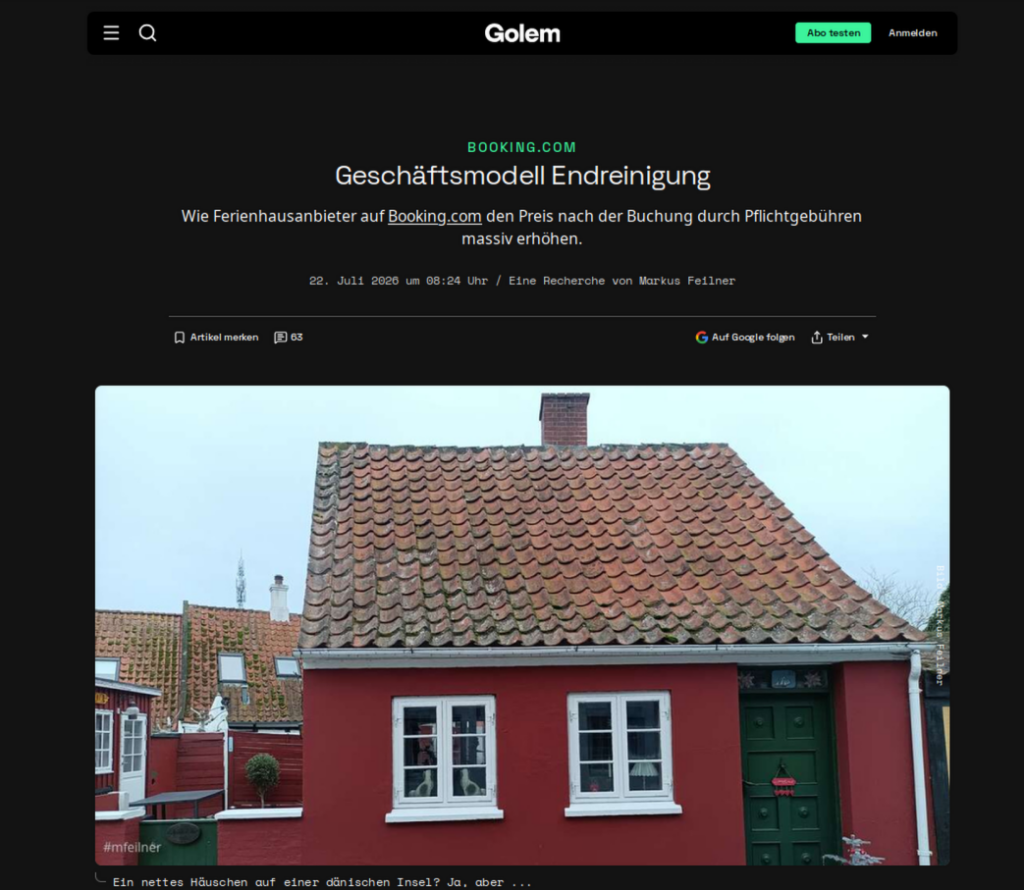
For Golem: Business model of final cleaning – How holiday home providers on Booking.com massively increase the price after booking through mandatory fees.
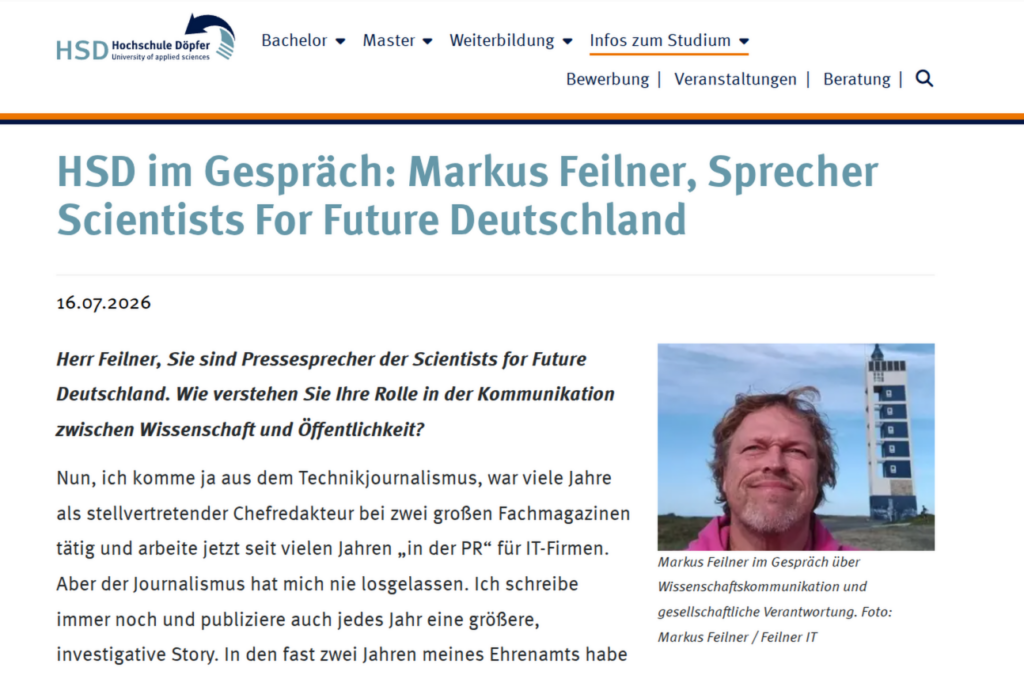
For HSD Hochschule Döpfer’s In Conversation Markus was interviewed about the challenges of scientific communication and how it differs in technical journalism in his role as Press Speaker for Scientists for Future, Germany.
Markus was interviewed for
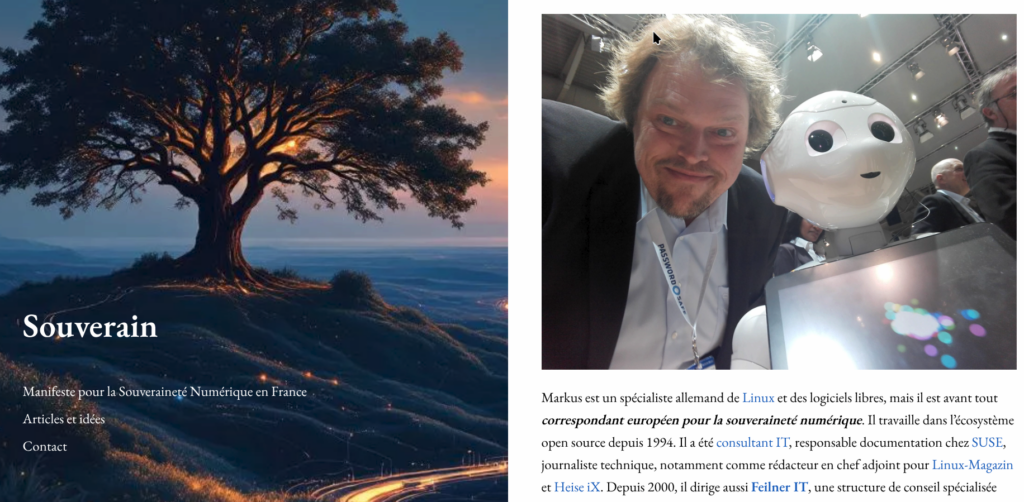
Souverain on the topic of not only digital, but hardware sovereignty. There are interesting things happening in France with the development of the SiPearl: the story of a European processor designed with the whole world
English browser-translated version available as a PDF here.
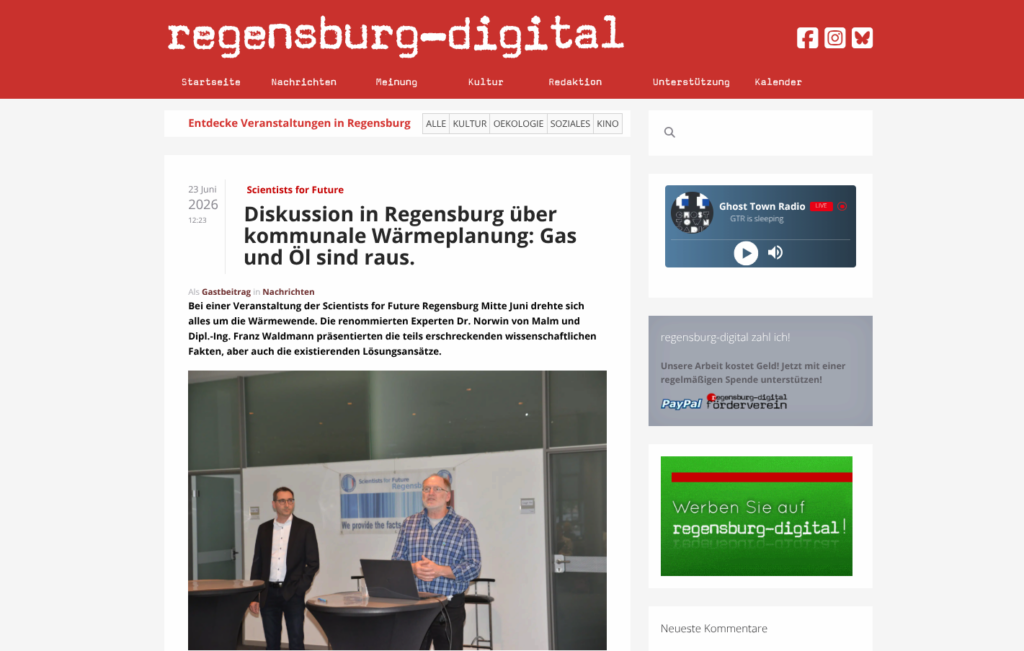
For regensburg-digital, June 2026: Discussion in Regensburg about municipal heat planning: Gas and oil are out.
At an event hosted by Scientists for Future Regensburg in mid-June, the focus was entirely on the energy transition. The renowned experts Dr. Norwin von Malm and Dipl.-Ing. Franz Waldmann presented the sometimes alarming scientific facts, but also the existing solutions.
For IT-Works-AG: No billion for Microsoft: Bavaria wants to develop open-source alternatives.
Under pressure from the public and Bavarian businesses, the Bavarian state government has backtracked and will now not invest another billion euros in further Microsoft services. A decisive factor in this decision was an open letter co-initiated by IT-Works CEO Rudolf Strobl.
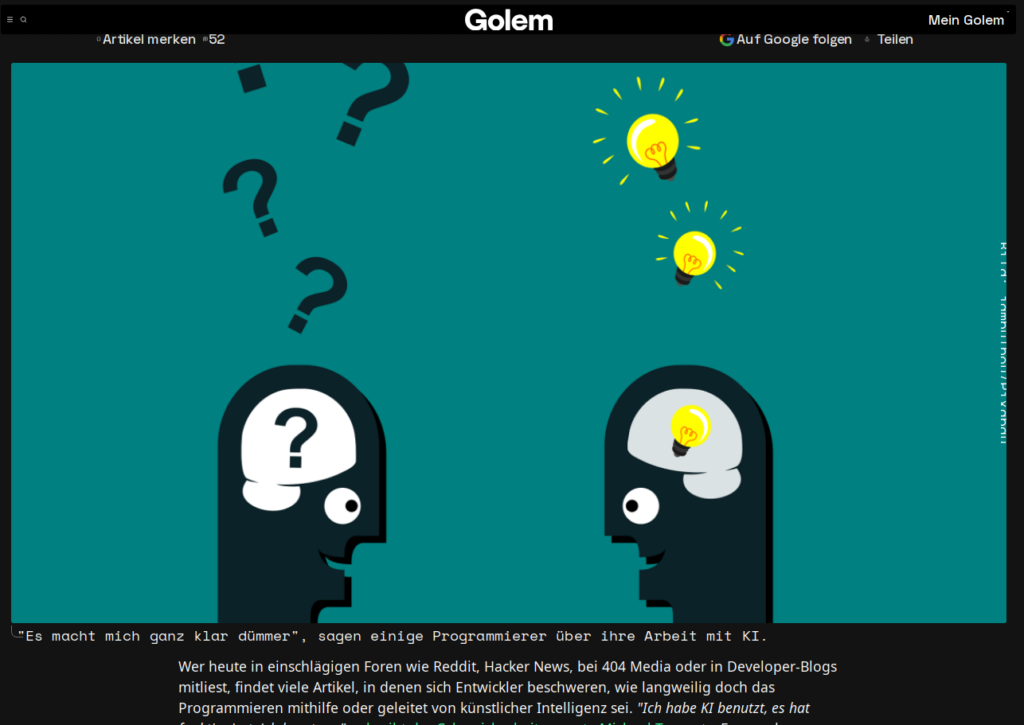
For Golem, June 2026: How AI in IT promotes cognitive decline More and more AI, less and less understanding? Developers fear the gradual loss of their skills.
In June Markus presented his talk How we hacked the Bavarian State with an Open Source Open Letter at openSUSE Conference 2026.
For many years, the annual gathering of the openSUSE community has been happening in Nuremberg, in the historical Z-Bau, and this year grommunio was the main sponsor!
For Golem, May 2026: BSI C3A criteria- “An invitation to sovereignty washing”
Oracle, Amazon and Google have advised the BSI on digital sovereignty in clouds. Science and civil society were not invited.

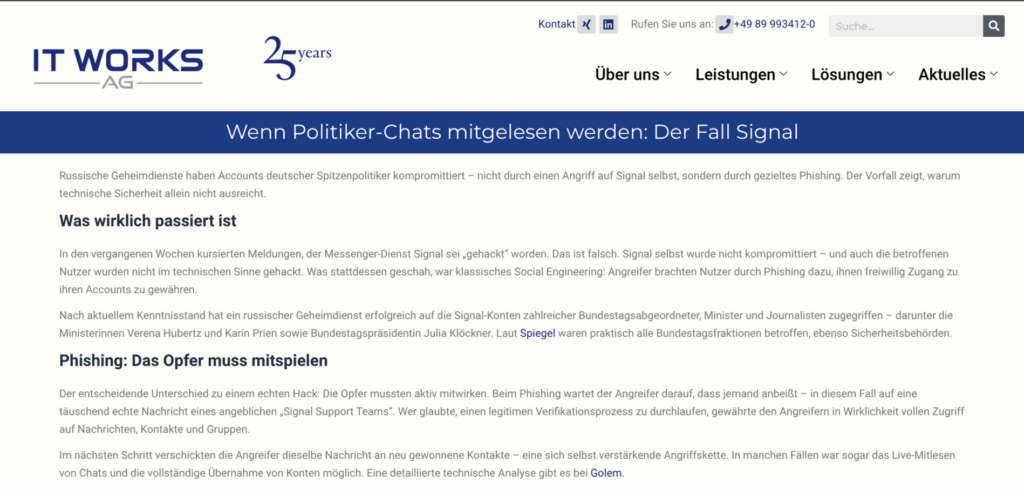
For IT-Works AG: When politicians’ chats are read: The Signal case
Russian intelligence services have compromised the accounts of top German politicians – not through an attack on Signal itself, but through targeted phishing. The incident demonstrates why technical security alone is not enough.
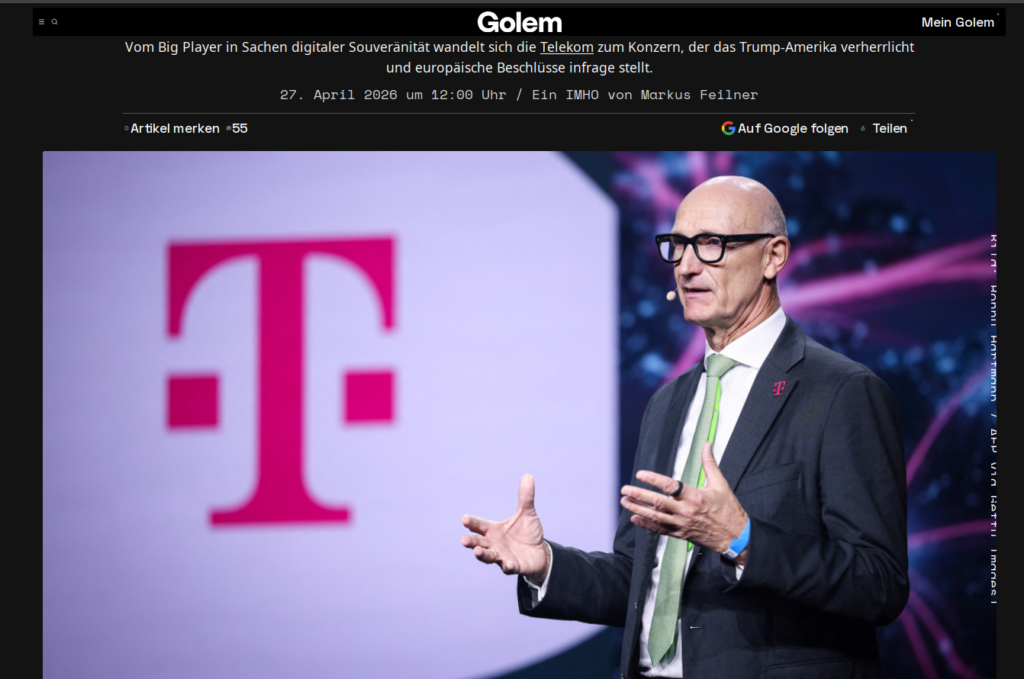
For Golem, April 2026: Merger plans with T-Mobile- Will Deutsche Telekom abandon Germany as a location?
From the big player in terms of digital sovereignty, Deutsche Telekom is transforming itself into a corporation that glorifies Trump America and questions European decisions.
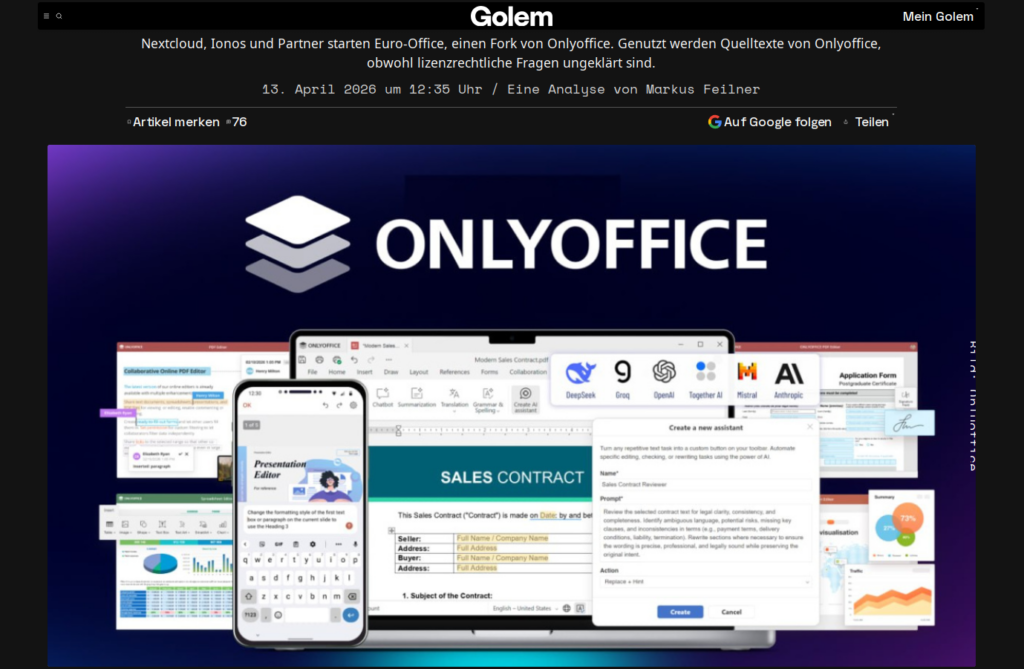
For Golem, April 2026: Euro Office theft or Robin Hood action?
Nextcloud, Ionos and Partner launch Euro-Office, a Fork from Onlyoffice. Source codes of Onlyoffice are used, although licensing issues are unsolved.
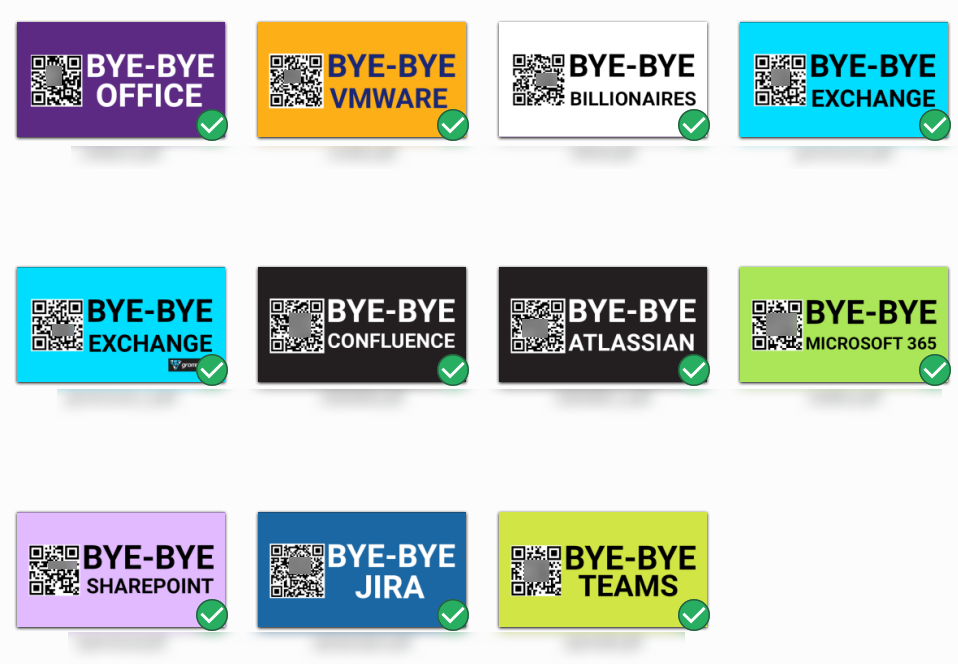
Going to Grazer Linuxtage 2026? Grab a sticker (or two, or even more)! This is a multi-project collaborative effort and more details to come.
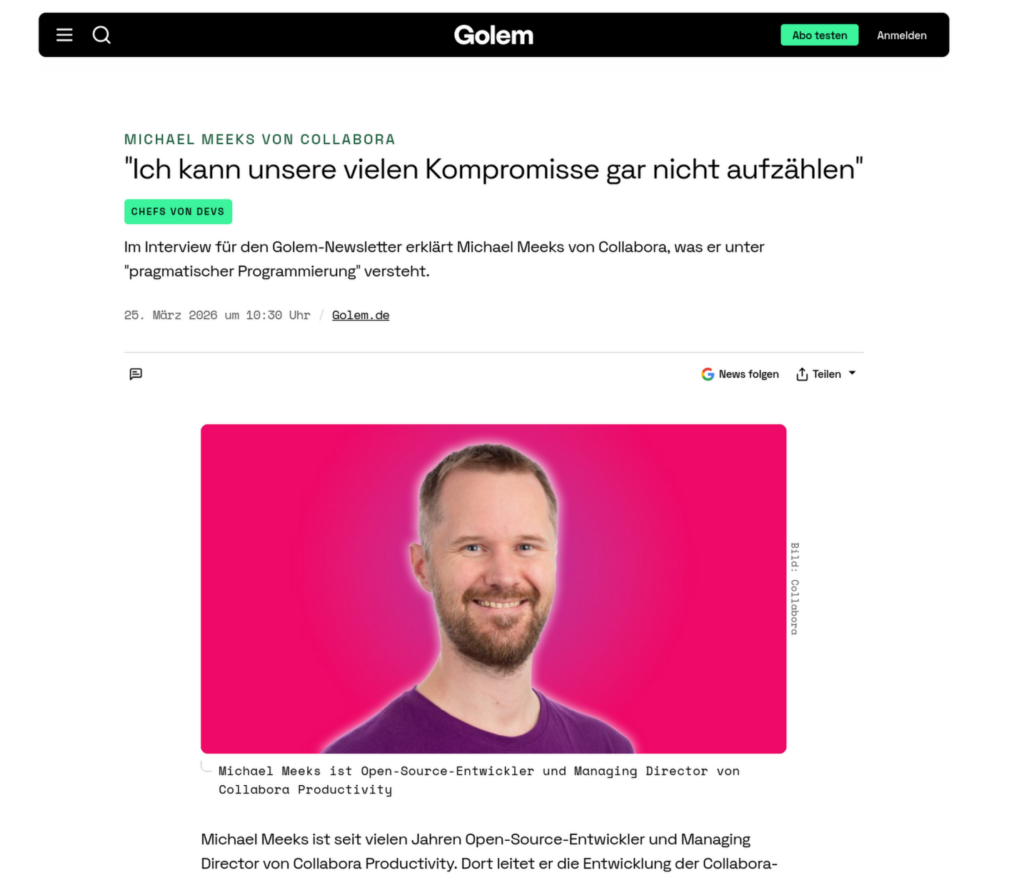
For Golem, April 2026. “I can’t even begin to list the many compromises we’ve made”
In an interview for the Golem newsletter, Michael Meeks from Collabora explains what he means by “pragmatic programming”. (in German)
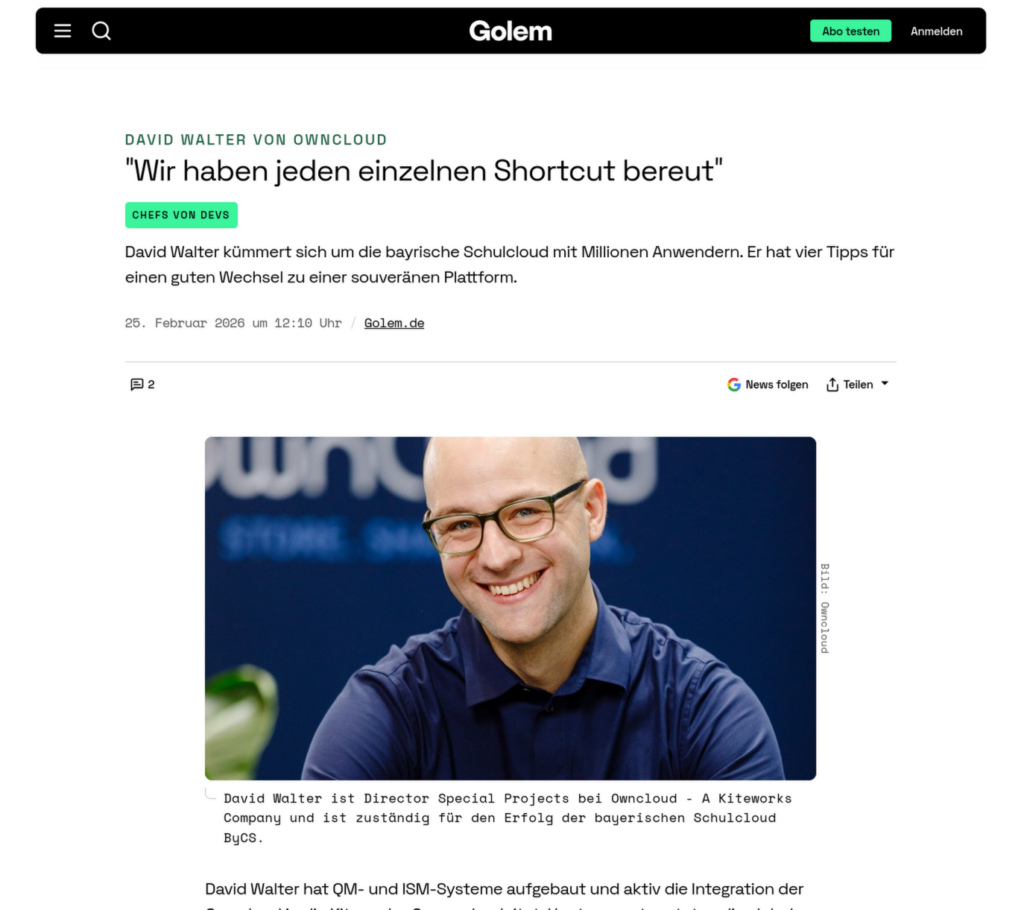
For the Golem Chefs von Devs newsletter, February 2026: David Walter takes care of the Bavarian school cloud with millions of users. He has four tips for a good transition to a sovereign platform. (in German)
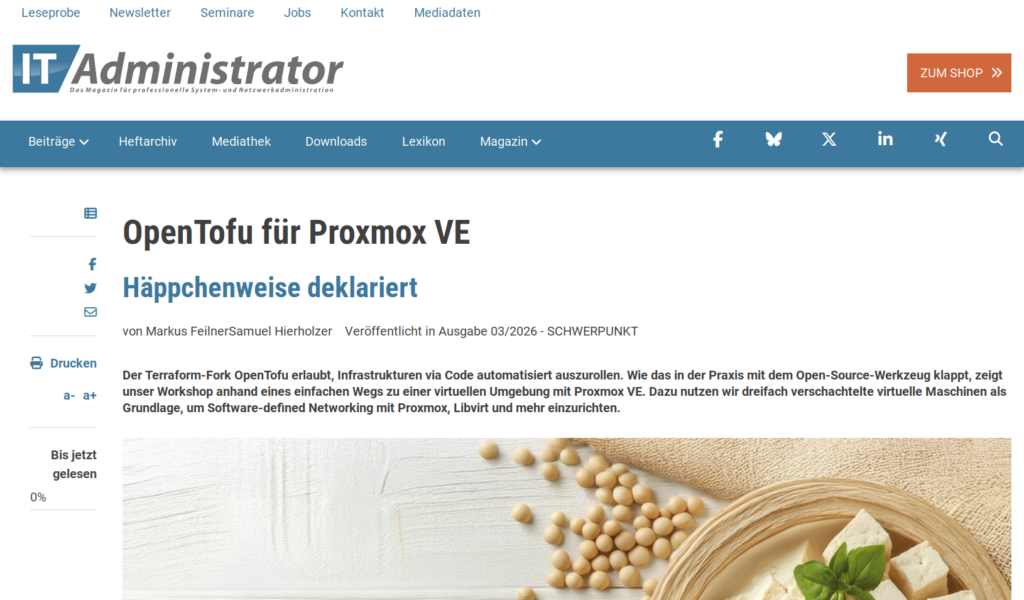
For IT Administrator, March 2026: (in German) The Terraform-Fork OpenTofu allows you to automatically roll out
infrastructures via code. Our workshop shows how this works in practice
with the open source tool using a simple way to a virtual environment
with Proxmox VE. For this purpose, we use triple-nested virtual machines
as a basis to set up software-defined networking with Proxmox, Libvirt
and more.
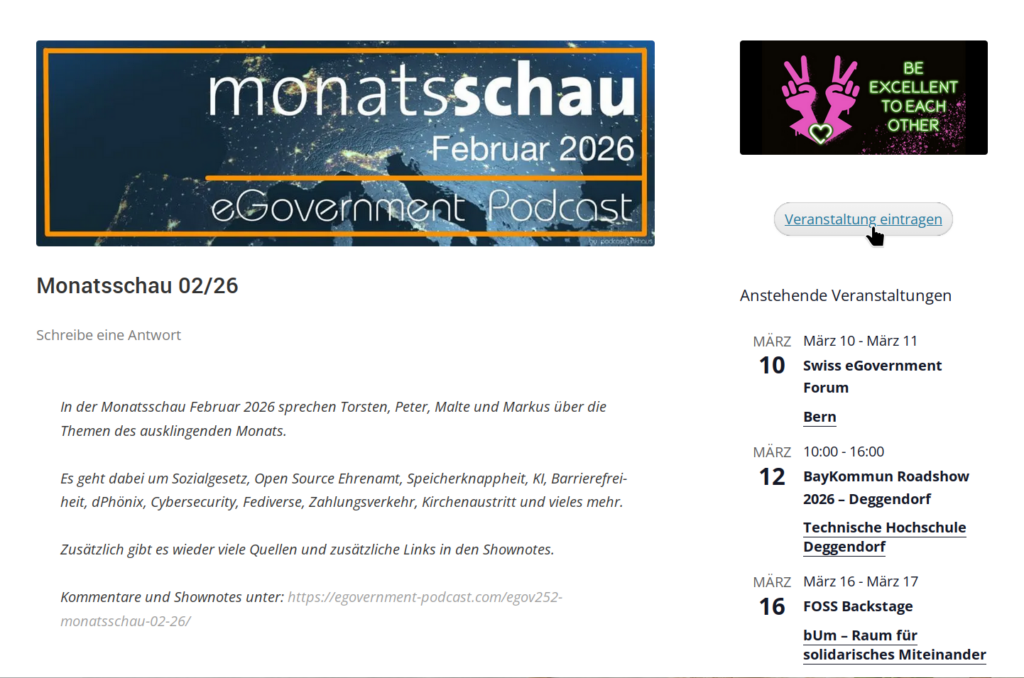
Markus was on the February, 2026 episode of eGovernment Podcast (in German).
Torsten, Peter, Malte and Markus talk about the topics of the end of the month, including social law, open source volunteering, memory shortages, AI, accessibility, dPhönix, cybersecurity, fediverse, payment transactions, church exit and much more.
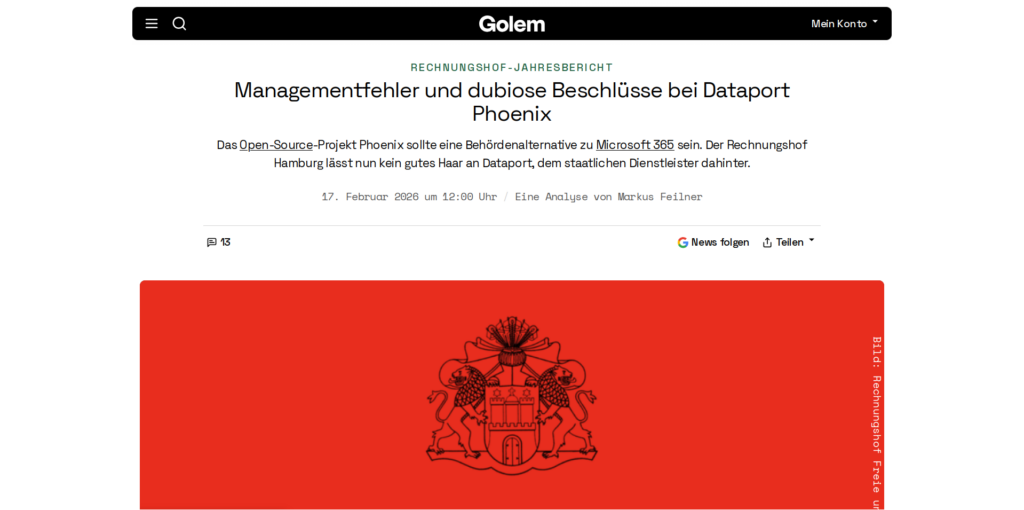
For Golem, Feb 2026: Management errors and dubious resolutions at Dataport Phoenix (in German)
“The Phoenix open source project should be an agency alternative to Microsoft 365. The Hamburg Court of Auditors is now not leaving a good hair on Dataport, the state service provider behind it.”
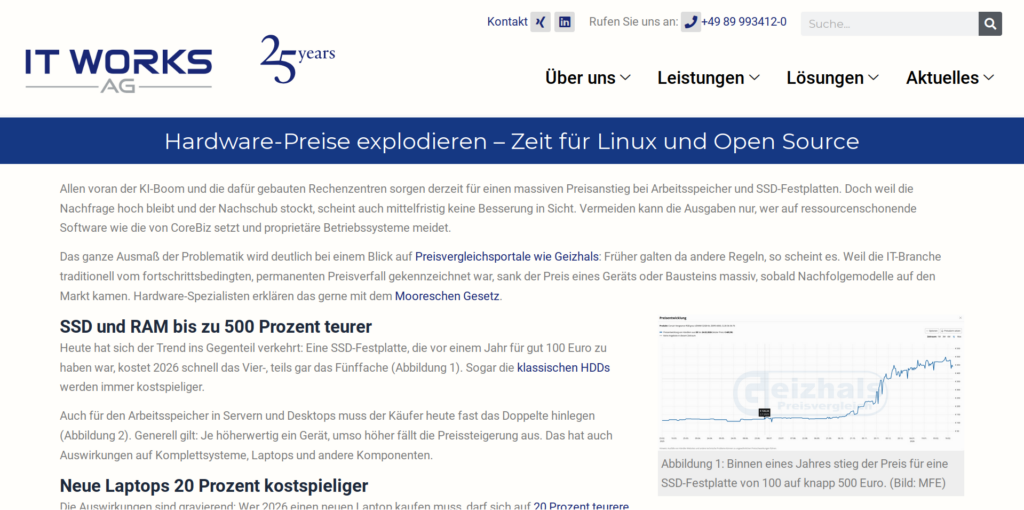
For IT Works, Feb 2026: Hardware-Preise explodieren – Zeit für Linux und Open Source (in German)
“Above all, the AI boom and the built data centers are currently ensuring a massive price increase in memory and SSD hard drives. But because demand remains high and supplies are stalled, no improvement seems to be in sight in the near term either.”
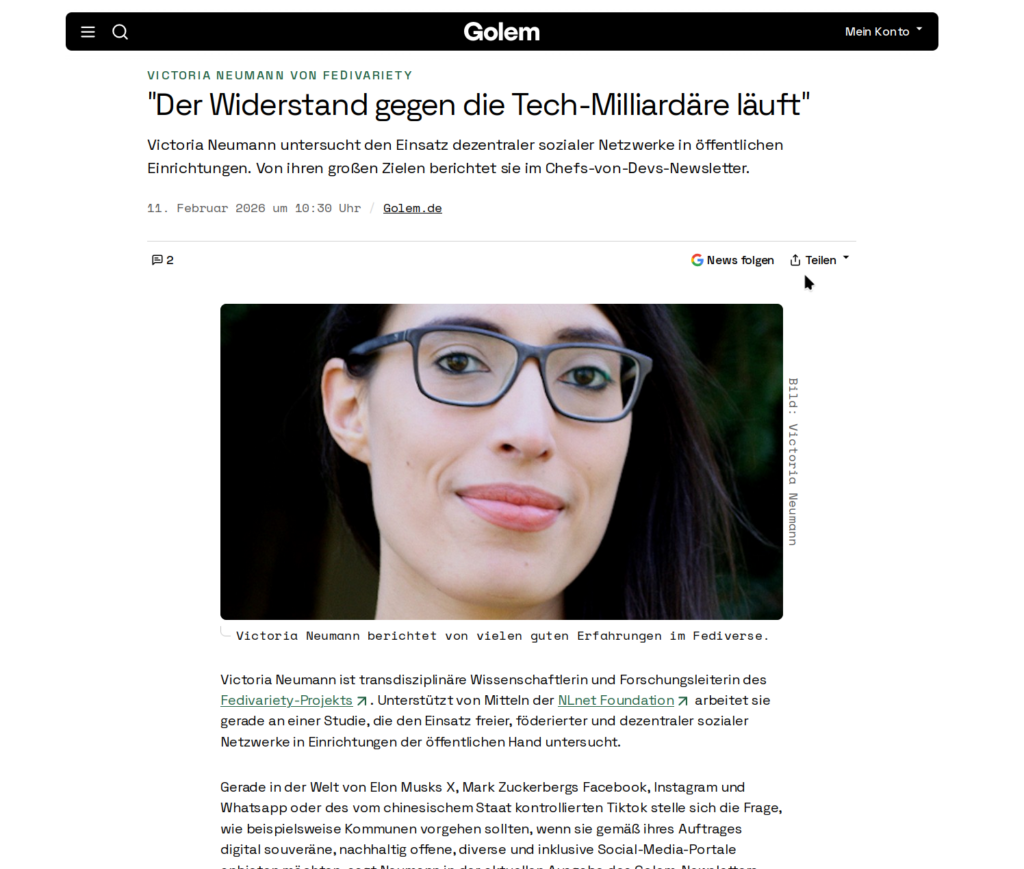
For the Golem newsletter “Chefs von Devs”, Feb 2026:
“The resistance against the tech billionaires is ongoing” Victoria Neumann examines the use of decentralized social networks in public institutions.
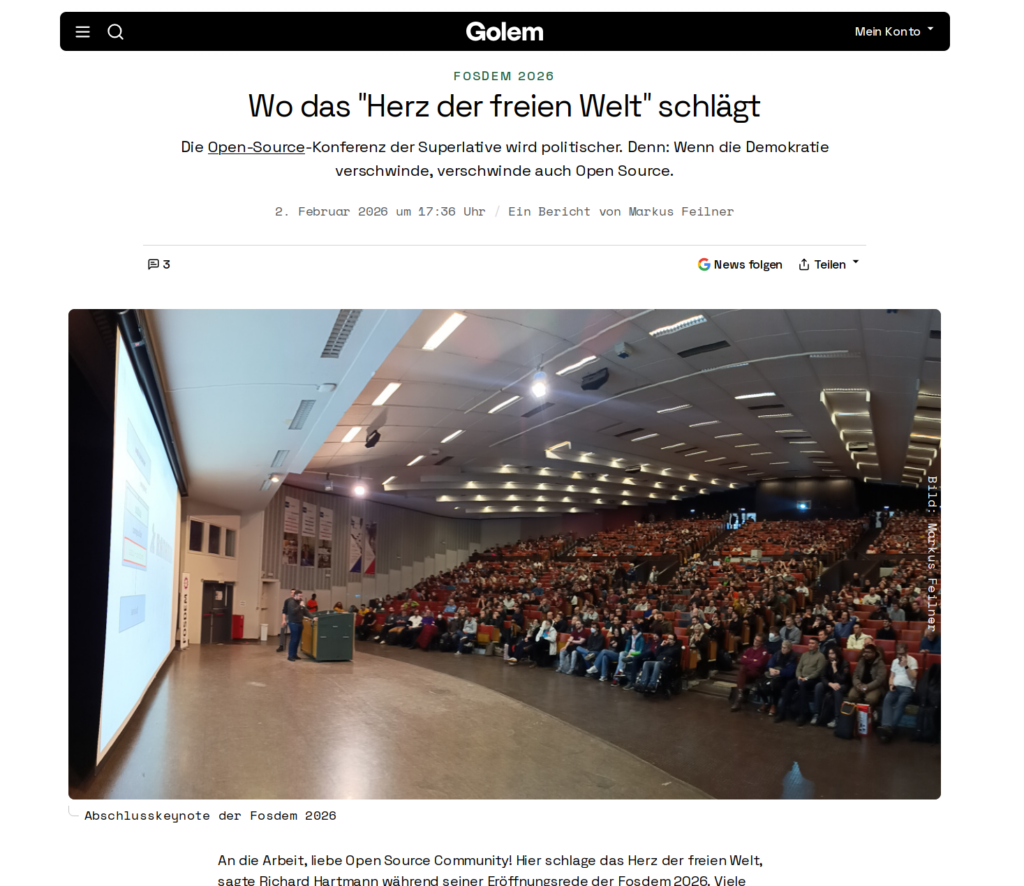
For Golem, Feb 2026:
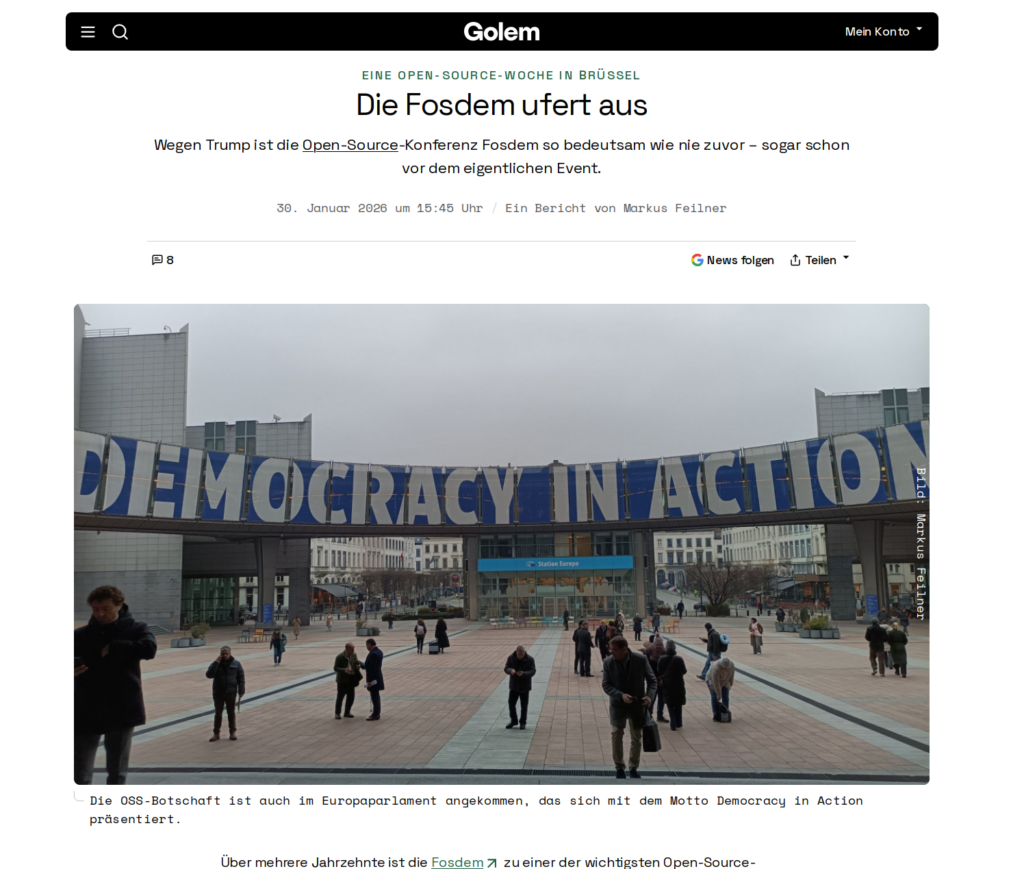
Where the “heart of the free world” beats The superlative open source conference is becoming more political. Because: If democracy disappears, open source will also disappear.
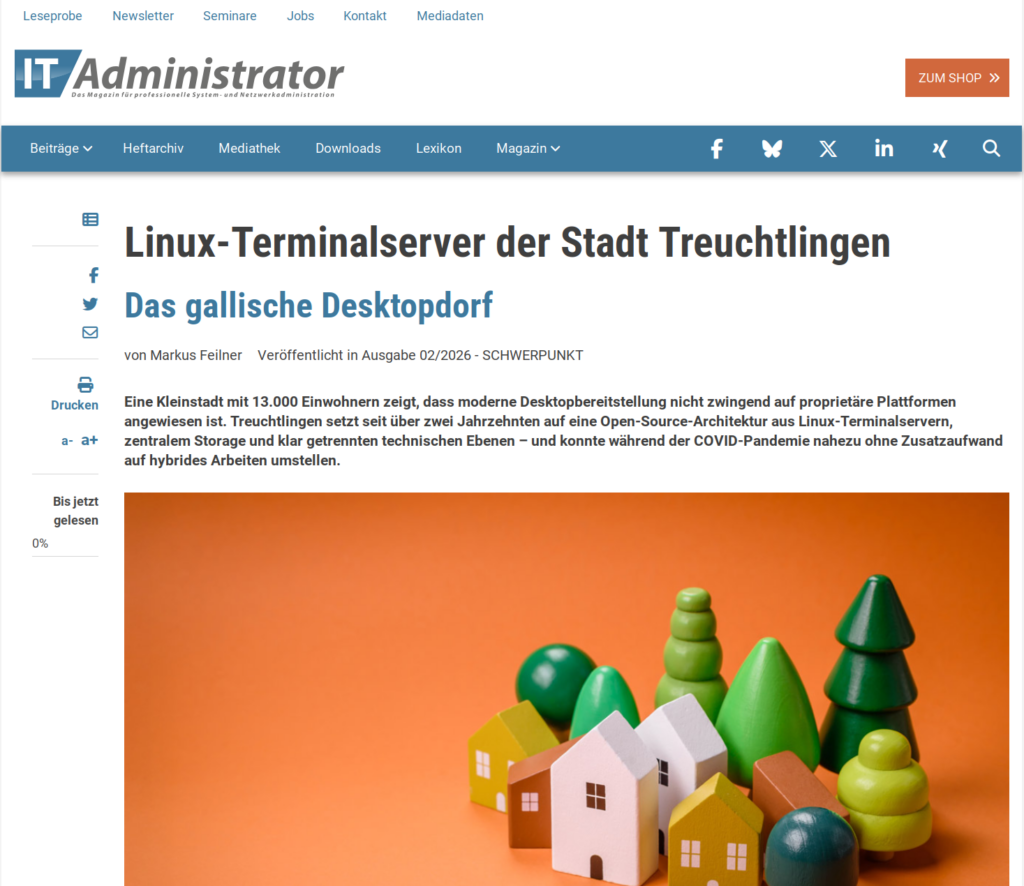
For IT-Administrator, Feb 2026:
A small town of 13,000 people shows that modern desktop delivery doesn’t necessarily rely on proprietary platforms.
For Golem, Feb 2026:
Because of Trump, the Fosdem open source conference is more important than ever – even before the actual event.
For Golem, January 2026:
The US government is deleting mass amounts of research whose facts and results do not meet its goals. But the international research community has taken countermeasures to keep the loss of knowledge as small as possible. And even if things are going well for digital sovereignty, there is still a lot to do.
For Golem, January 2026:
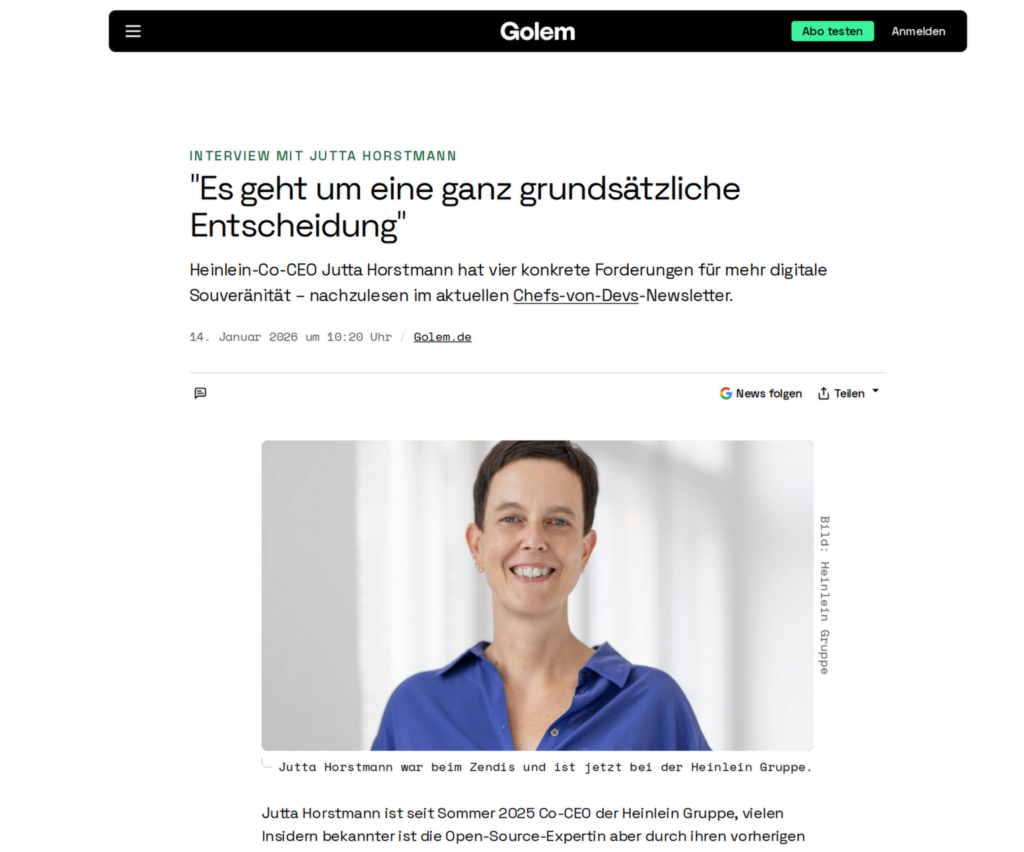
Interview with Jutta Horstmann: “It’s about a very basic decision”
Heinlein co-CEO Jutta Horstmann has four concrete demands for more digital sovereignty – to read in the current Chefs-von-Devs newsletter.
For Golem, January 2026 (This is the most read article on Golem right now):
Now it’s getting expensive for everyone
(German) Management continues to love a phantom, but in 2026 it will be a risk for everyone. Because private households and taxpayers will foot the bill for the costs of the AI bubble.